.svg)
.svg)
Shoham st. 4
Ramat Gan 5251004
Israel
Ramat Gan 5251004
Israel
end
Lutin Creations was founded in 1986. Since then, every piece that has left our workshop has been held to the same standard — the highest one we know how to reach.
Lutin Creations was established in 1986 with a single discipline: the setting of diamonds and precious stones into high-quality jewelry. From the beginning, the work attracted clients who required precision above everything else — pieces where the margin for error was not a margin at all.
Nearly four decades of uninterrupted craft, beginning with stone setting and growing into the full high-jewelry production cycle: design, CNC manufacturing, cutting, casting, setting, and finishing.
Through the late 1980s and into the 1990s, Lutin Creations became known for one thing: executing the pieces other workshops turned down. Invisible settings on baguette compositions. Multi-stone constructions with zero tolerance for misalignment. Work that required not just skill, but a standard of thinking that treated every micron as a decision.
The orders that shaped the company came from those who could not afford to be wrong — Swiss watch houses, international high-jewelry brands, and private commissions where the specification was the contract. That clientele did not choose on price. They chose on evidence. And the evidence accumulated, piece by piece, over more than a decade.
After the industry crisis of 1998, Israeli jewelry manufacturing effectively stopped evolving. Investment in precision technology, digital design, and skilled training collapsed. The international orders that had defined the country’s reputation in high-jewelry — from Swiss watch houses, from Graff, from Chopard, from de Grisogono — moved elsewhere.
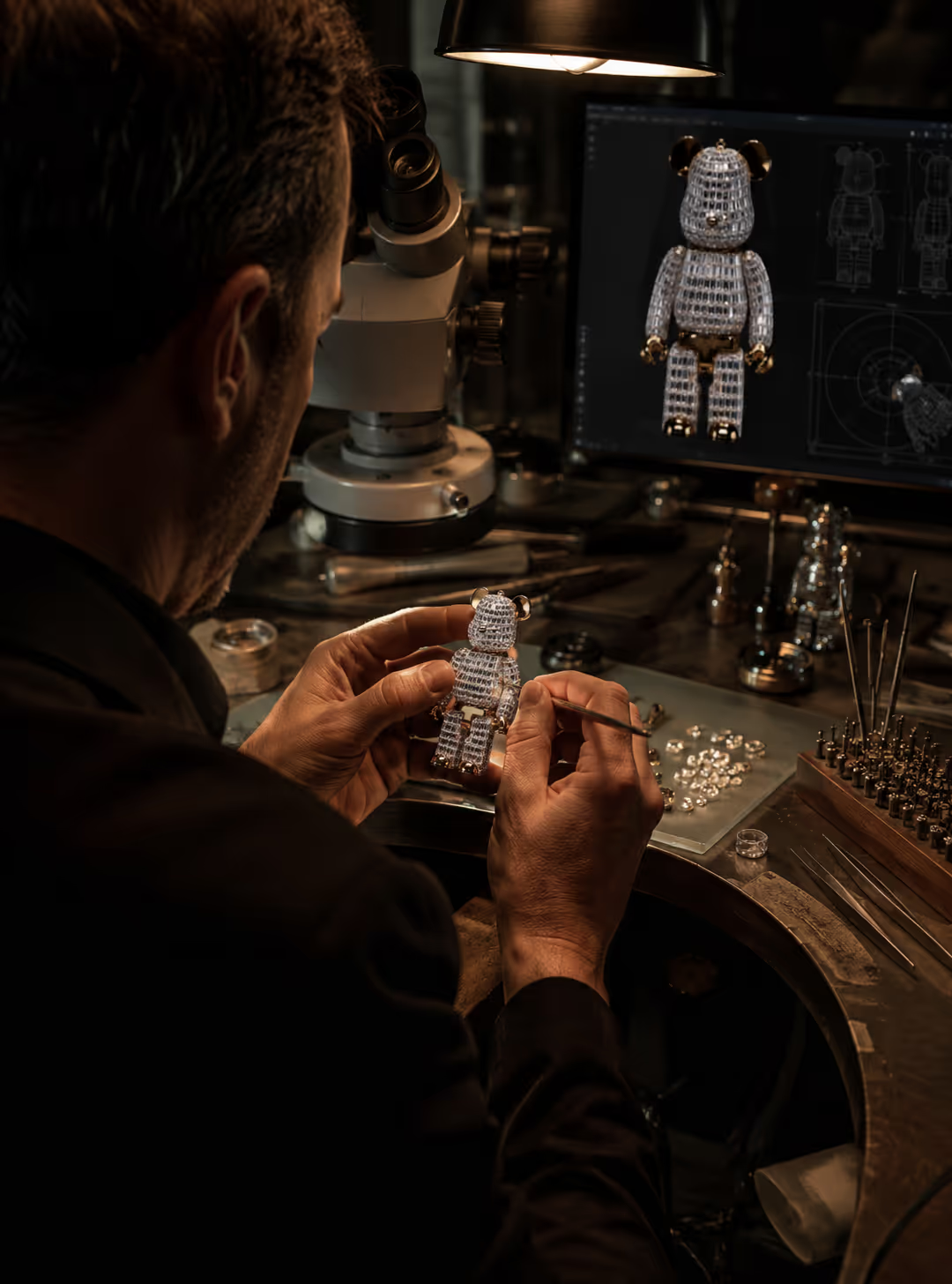
The capability that was lost was not a matter of taste. It was a matter of competence. The full technical chain required to execute complex, high-specification pieces — parametric modeling, CNC prototyping, Invisible setting, micron-precision finishing — ceased to exist at scale in Israel.
.svg)
Orders requiring micron-level tolerance and total production repeatability — the most demanding standard in the world.

Graff, Tiffany & Co., Chopard, de Grisogono, Jacob & Co. — brands for whom the piece must be exactly right, without negotiation.

Invisible setting, baguette compositions, custom-cut stones, CNC-machined components, and a full production chain in a single facility.
In 1992, Lutin Creations made a decision that was ahead of its time: we integrated CNC machinery into our jewelry production chain. We were among the first in the industry to do so. While the rest of the market was retreating after 1998, that decision had already given us something the market could not take back.
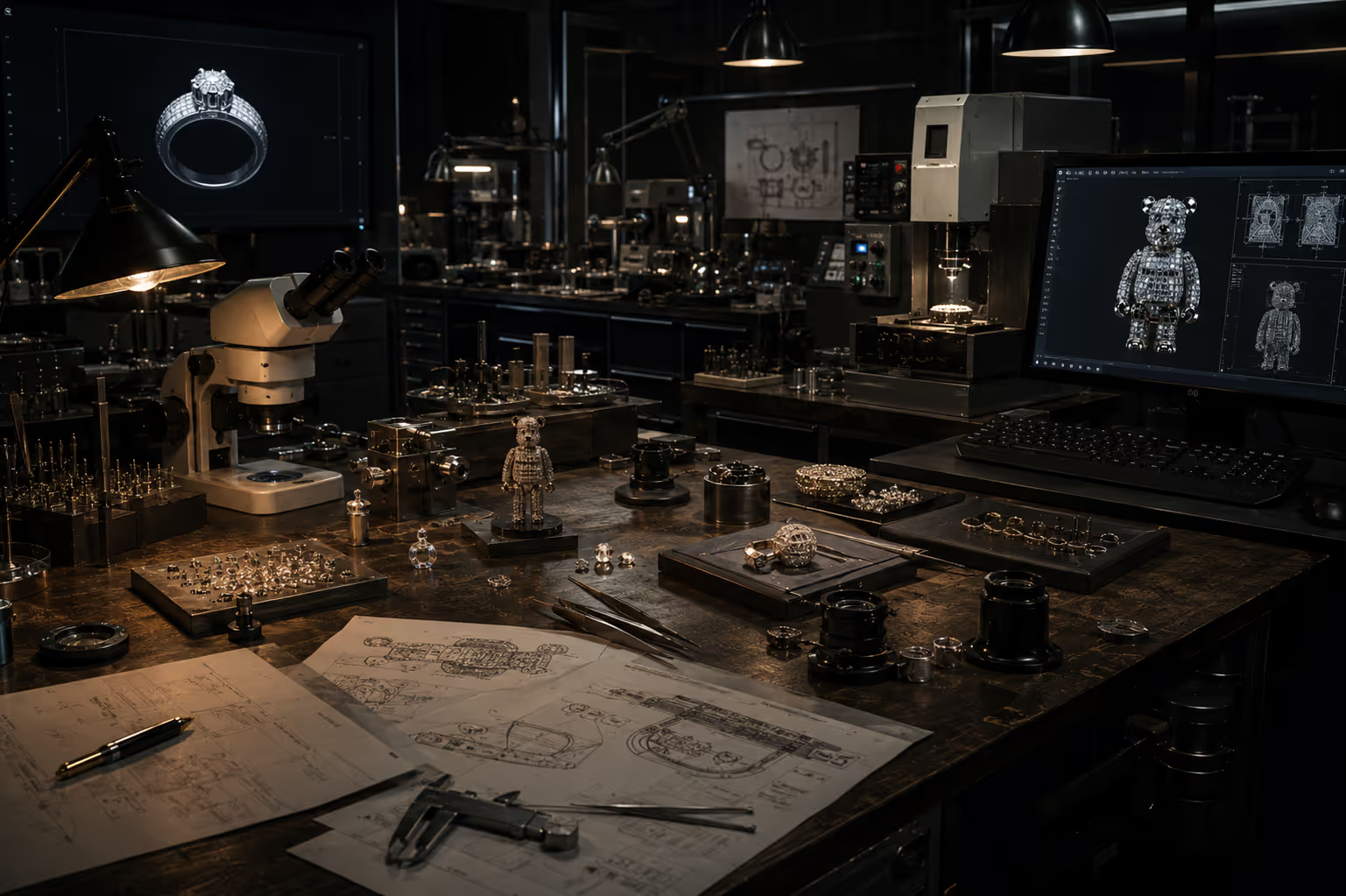
CNC machinery introduced a level of precision and repeatability that hand-craft alone cannot achieve. It allowed us to machine wax and soft metal prototypes with micron accuracy, to hold tolerances demanded by Swiss watchmakers, and to execute Invisible setting — the most technically exacting setting method in high jewelry — consistently and at scale.
The expertise that accumulated between 1986 and today sits at the intersection of traditional jewelry craft, high-precision CNC manufacturing, and digital design. That combination — rare anywhere in the world — is the foundation of everything we do today, including the Academy.
Lutin Creations operates across the full high-jewelry production cycle. Five disciplines, one facility, one standard of execution.
Parametric 3D modeling, technical stone-placement drawings, and production-ready files prepared to exact specification.
High-precision CNC machining of wax and soft metal prototypes, master models, and production components — to micron tolerance.
Custom stone cutting to exact contour and dimension, including preparation for Invisible setting and Chanel-standard baguette compositions.
All major setting types: pavé, channel, bezel, baguette, and Invisible setting — the benchmark of high-jewelry craftsmanship, executed in-house.
In-house casting in gold, platinum, silver, and specialist alloys, with post-casting refinement and surface treatment to production specification.
A professional training program rebuilding Israel’s lost expertise in high-jewelry production — from 3D design to Invisible setting.
The Jewelry Academy of Lutin Creations was built to address a structural gap: Israel has almost no professional infrastructure for training the next generation in precision high-jewelry production. The skills exist within our walls. The Academy exists to transfer them.
The model is not theoretical. Students train inside a working production environment. The most capable graduates work alongside senior craftspeople on real commissions — developing the kind of judgment that only comes from producing work that must be right.
The Academy trains across the full production chain: 3D design, CNC manufacturing, stone cutting, casting, setting, and finishing. Graduates leave production-ready. This is not a certificate programme. It is an apprenticeship at the highest level.
Lutin Creations, est. 1986

